




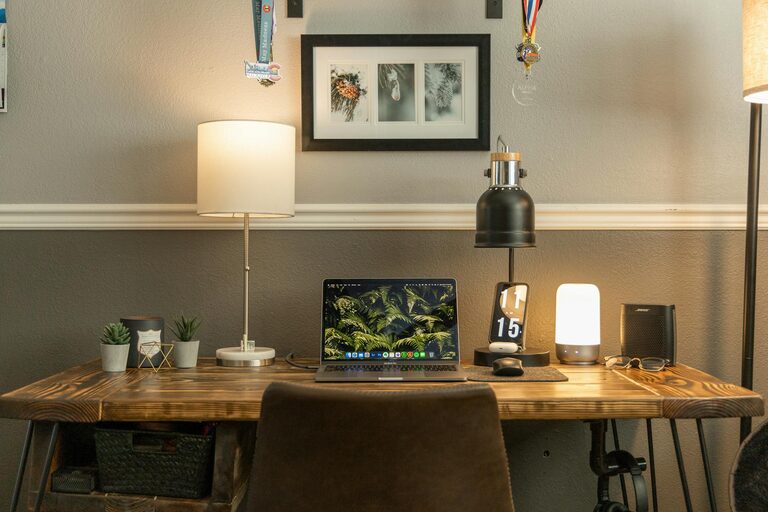
Creating a home office that is both cozy and productive can transform the way you work from home. With more people embracing remote work, having a dedicated space that feels inviting yet helps maintain focus is essential. Whether you have a spare room or just a small corner, these tips will help you set up an ideal home office that supports your daily tasks and enhances your well-being.
1. Choose the Right Location
Selecting the right spot for your home office is the first step. Ideally, find a quiet area with minimal distractions. If possible, use a separate room to create clear boundaries between work and personal life. If space is limited, a corner in the living room or bedroom can work well as long as you can separate it visually from the rest of the space.
Consider natural light
Natural light not only helps reduce eye strain but also boosts mood and energy levels. Position your desk near a window to take advantage of daylight, ensuring that the light doesn’t cause glare on your computer screen.
2. Invest in Comfortable Furniture
Comfort and ergonomics play a crucial role in productivity. Spending hours in a chair that doesn’t support your posture can cause discomfort and affect your focus.
– Chair: Choose an adjustable chair with lumbar support.
– Desk: Pick a desk at the right height for sitting or standing options if preferred.
– Accessories: Use a footrest or ergonomic keyboard and mouse if needed.
Comfortable furniture helps you maintain good posture and reduces fatigue during long working hours.
3. Organize and Declutter
A cluttered workspace can be distracting and reduce efficiency. Keep your desk tidy by organizing supplies and paperwork.
– Use storage solutions such as shelves, filing cabinets, or desk organizers.
– Regularly declutter your workspace.
– Keep only necessary items on the desk to maintain a clean surface.
A neat environment promotes clearer thinking and reduces stress.
4. Personalize Your Space
Adding personal touches makes your home office more inviting and comfortable. This can include:
– Photos or artwork that inspire you.
– Plants to improve air quality and add a touch of nature.
– A cozy throw blanket or cushion for comfort.
– Favorite colors in décor or accessories to brighten the room.
Personalizing your space can make work feel more enjoyable and help reduce stress.
5. Control Lighting and Temperature
Good lighting is essential for reducing eye strain and maintaining energy. Consider these points:
– Use layered lighting: combine ambient light with task lighting such as desk lamps.
– Position lights to avoid screen glare and shadows.
– Keep the temperature comfortable—neither too hot nor too cold—using a fan, heater, or thermostat control as needed.
Proper lighting and temperature control create a comfortable atmosphere conducive to focus and productivity.
6. Manage Noise Levels
Noise distractions can break your concentration. If you are in a noisy environment, try:
– Using noise-cancelling headphones.
– Playing soft background music or white noise.
– Adding rugs, curtains, or wall panels to absorb sound.
A quieter workspace helps you concentrate better and work more efficiently.
7. Establish a Daily Routine
Even with a great home office, maintaining a routine is important.
– Set consistent working hours.
– Take regular breaks away from your desk.
– Use task lists or planners to organize your day.
Having a routine helps maintain work-life balance and improves productivity.
8. Utilize Technology Wisely
Ensure your technology supports your workflow effectively.
– Invest in a reliable computer and high-speed internet.
– Use productivity apps or tools to organize tasks and communication.
– Keep cables tidy with clips or organizers to avoid a messy desk.
Good technology setup minimizes disruptions and helps you work efficiently.
9. Keep Movement in Mind
Sitting all day can negatively impact health and productivity.
– Incorporate standing desks or sit-stand converters if possible.
– Take short breaks to stretch or walk around.
– Consider exercises or stretches that can be done during breaks.
Being mindful of movement helps maintain energy and focus throughout the day.
Final Thoughts
Designing a cozy and productive home office is about balancing comfort and function. By choosing the right location, investing in ergonomic furniture, organizing thoughtfully, and personalizing your space, you’ll create an environment where you can work efficiently and feel good doing it. Remember that small changes can make a big difference in your daily workflow and overall satisfaction with your home office.
Start with these tips today and enjoy a better work from home experience tomorrow!



More Stories
Tips for Creating a Productive Home Workspace
Tips for Creating a Cozy and Productive Home Workspace
Tips for Creating a Cozy and Inviting Home Environment